Included
Medicare Part A
Hospital insurance benefits, including Medicare-covered inpatient hospital and other Part A services, are provided through the Medicare Advantage plan.

Medicare Advantage, also called Medicare Part C, is a Medicare-approved private health plan that provides your Part A and Part B benefits instead of Original Medicare. Most plans also include Part D drug coverage and may offer extra benefits such as dental, vision, and hearing.

A Medicare Advantage plan is another way to receive your Medicare benefits. You must have both Medicare Part A and Part B to join. Medicare-approved private insurance companies administer the plans, but the plans must provide the Part A and Part B services Medicare requires.
Most plans include Part D prescription drug coverage. Many also offer benefits Original Medicare does not generally provide, including certain dental, vision, hearing, fitness, transportation, over-the-counter, or meal benefits. The exact benefits, provider network, costs, and rules vary by plan and location.
Think of Medicare Advantage as a private-plan way to receive Medicare benefits, with plan-specific costs, networks, and rules.
Hospital insurance benefits, including Medicare-covered inpatient hospital and other Part A services, are provided through the Medicare Advantage plan.
Medical insurance benefits, including Medicare-covered physician, outpatient, preventive, and other Part B services, are provided through the plan.
Most Medicare Advantage plans include prescription drug coverage. If drug coverage is included, you generally use the plan's formulary and pharmacy network.
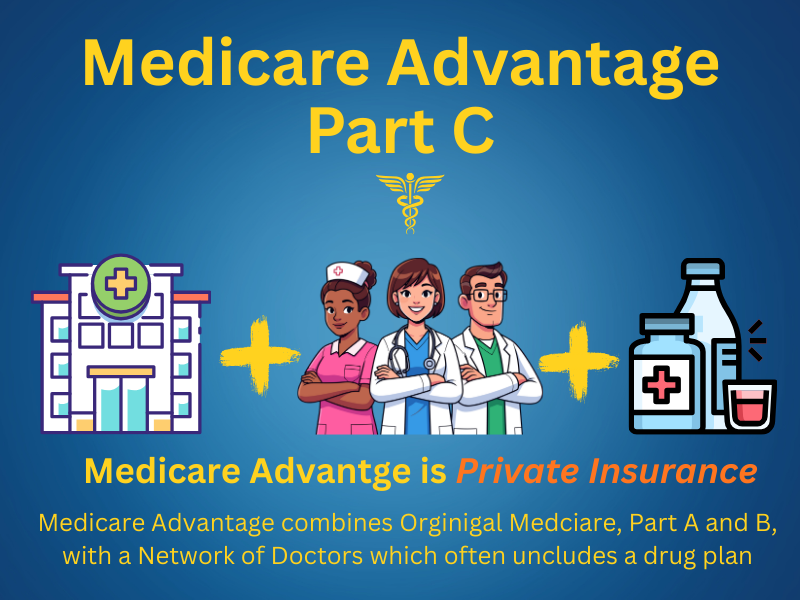
You still have Medicare, but a Medicare-approved private plan becomes the primary way you receive most of your Part A and Part B benefits.
You must have both Medicare Part A and Part B before you can join a Medicare Advantage plan.
Available plans vary by county and service area. Plan types, premiums, networks, and benefits can differ significantly.
You may use a provider network, pay copays or coinsurance, and need referrals or prior authorization for certain services.
Premiums, provider networks, drug formularies, copays, and extra benefits can change from one plan year to the next.
There is no single Medicare Advantage price. Your total cost depends on the plan you choose and how you use care.
You generally must continue paying your Medicare Part B premium to remain enrolled in Medicare Advantage. Some plans may help pay part or all of that premium.
Some plans have a $0 monthly plan premium, while others charge an additional premium. A $0 premium does not mean the plan has no out-of-pocket costs.
Plans set their own cost-sharing within Medicare rules. You may pay different amounts for primary care, specialists, hospital stays, outpatient procedures, drugs, and other services.
Medicare Advantage plans have an annual limit on what you pay for covered Part A and Part B services. After you reach the plan's limit, the plan pays 100% of covered health services for the rest of the calendar year.
If your plan includes Part D, drug costs depend on the plan's formulary, pharmacy network, tiers, and Part D cost-sharing rules.
Premiums, deductibles, copays, coinsurance, benefits, and networks can change each year, so annual plan review matters.
The plan type affects how you access doctors, hospitals, specialists, and out-of-network care.
Health Maintenance Organization plans generally require you to use network providers except for emergencies, urgent care, and certain other exceptions. Referrals may be required.
Preferred Provider Organization plans have provider networks but generally allow covered out-of-network care at a higher cost when the provider agrees to treat you under the plan's rules.
Special Needs Plans are designed for people who meet specific eligibility criteria, such as certain chronic conditions, institutional status, or eligibility for both Medicare and Medicaid.
Private Fee-for-Service plans determine how much they pay and how much you pay. Provider participation rules differ from HMO and PPO networks.
Medical Savings Account plans combine a high-deductible Medicare Advantage plan with a medical savings account. These plans generally do not include Part D drug coverage.
Both are ways to receive Medicare coverage, but the way you access care and pay for services can be very different.
Many plans offer supplemental benefits beyond what Original Medicare generally covers, but availability and limits vary by plan.
Some plans provide preventive or comprehensive dental benefits, subject to the plan's provider network, allowances, copays, or benefit limits.
Plans may include routine eye exams and an allowance or coverage toward glasses or contact lenses.
Some plans include routine hearing exams and hearing-aid benefits, often with plan-specific provider or device requirements.
Some plans include fitness memberships, wellness programs, or other preventive support.
Certain plans may offer transportation or meal benefits for qualifying members or circumstances.
Some plans provide an allowance for eligible over-the-counter health products. Amounts and eligible items vary.
The best plan is the one that fits your actual doctors, prescriptions, health care needs, and budget, not simply the plan with the largest list of extras.
Yes. Medicare Advantage plans are also called Medicare Part C or MA plans.
Yes. You still have Medicare, but you receive most of your Part A and Part B benefits through the Medicare Advantage plan rather than directly through Original Medicare.
Generally, yes. You must keep Medicare Part B and continue paying the Part B premium to remain in Medicare Advantage. Some plans may help pay part or all of the Part B premium.
Yes. Some plans have a $0 monthly plan premium, but you may still pay the Part B premium plus plan deductibles, copays, coinsurance, and prescription drug costs.
Most Medicare Advantage plans include Medicare Part D drug coverage, but not every plan does. Medical Savings Account plans generally do not include Part D.
It depends on the plan type. HMO plans generally require network providers for non-emergency care. PPO plans usually allow out-of-network care at a higher cost when the provider accepts the plan's terms.
You cannot use Medigap to pay Medicare Advantage deductibles, copays, or coinsurance. Medigap is designed to work with Original Medicare, not Medicare Advantage.
They can. Premiums, cost-sharing, provider networks, drug formularies, and supplemental benefits may change each plan year, which is why reviewing your Annual Notice of Change and comparing plans can be important.
Medicare Advantage plan details can change each year. These official Medicare and CMS resources are the primary references for this page.
Compare plans based on your doctors, prescriptions, hospitals, expected health care use, out-of-pocket exposure, and the extra benefits that actually matter to you.
Request Medicare Plan InformationSenior Healthcare Planning is an independent insurance agency that provides education, guidance, and enrollment assistance for Medicare-related insurance products, including Medicare Advantage, Medicare Supplement, and Prescription Drug Plans. Senior Healthcare Planning is not connected with or endorsed by the United States government or the federal Medicare program. Medicare Advantage plan availability, premiums, provider networks, drug formularies, cost-sharing, and supplemental benefits vary by plan and service area and can change each year.